
Introduction
By the time most people reach their late 20s, they’ve had a handful of routine labs: maybe a cholesterol check, a blood count, or a Pap smear. But functional medicine takes a much broader and deeper approach. Instead of waiting until something goes wrong, we look for subtle signs and patterns that can reveal hidden imbalances long before they turn into bigger health problems.
“30 Labs Before You’re 30” isn’t about hitting an arbitrary number. It’s about ensuring you’ve had the right combination of labs and screenings to give you a complete picture of your health. At Cherry Blossom Natural Wellness, we see lab work as detective work — every test adds another clue to your health story.
The examples below show the difference between the lab work of a general doctor and a functional medicine doctor.
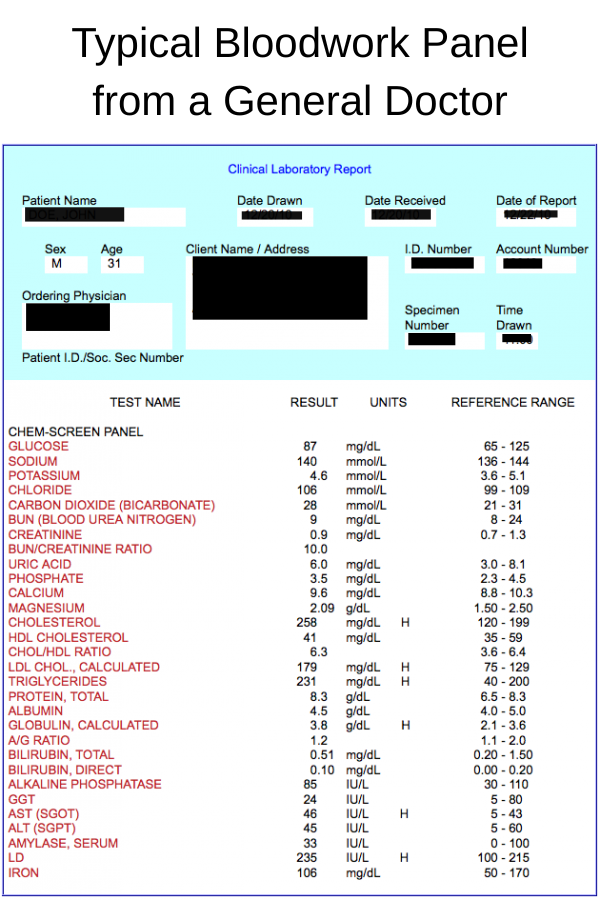
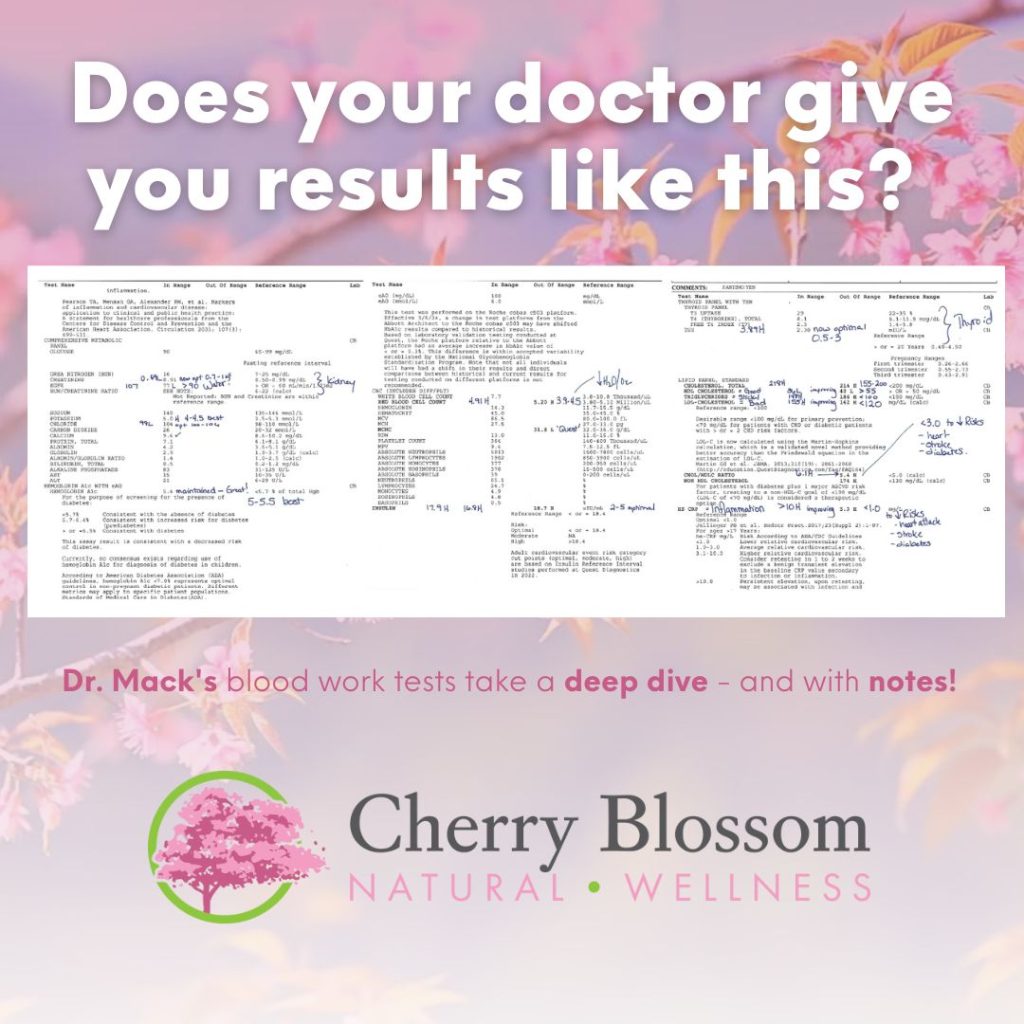
Below, we’ll explore which labs and screenings matter most for everyone, and which ones are especially important for women and men.
Labs and Screenings for Everyone Before 30
Complete Blood Count (CBC) and Comprehensive Metabolic Panel (CMP)
These foundational tests look at red and white blood cells, liver and kidney function, and electrolyte balance. They’re often the first clue when something deeper needs investigation.
Lipid Panel
High cholesterol and triglycerides can start showing up earlier than expected. Functional medicine looks at the quality of your cholesterol particles, not just the numbers, to better understand heart health.
Blood Pressure Check
Even young adults can develop early signs of hypertension. Tracking patterns over time provides a clearer picture than a single reading at your annual physical.
Blood Sugar & Insulin Resistance (Fasting Glucose, HbA1c, Fasting Insulin)
Glucose and insulin resistance often shift silently for years before a diabetes diagnosis. Functional medicine uses these labs to catch metabolic changes early.
Thyroid Panel (TSH, Free T3, Free T4, T7, T3 uptake, Antibodies)
Many conventional doctors only test TSH, but that doesn’t tell the whole story. A full panel can uncover autoimmune conditions, sluggish conversion of hormones, or hidden thyroid dysfunction.
Vitamin D
This critical nutrient affects immune health, energy, and bone strength. Deficiency is common, even in sunny climates.
Iron Studies (Ferritin, Serum Iron, TIBC, Transferrin Saturation)
Iron imbalances can masquerade as fatigue, brain fog, or mood changes. Both deficiency and overload are important to identify.
B12 and Folate
Low levels can contribute to anemia, nerve issues, and cognitive changes. Functional medicine also evaluates whether your body is actually absorbing and using these nutrients.
CRP and Inflammation Markers
Chronic inflammation is often invisible but plays a role in conditions ranging from gut issues to heart disease.
Food Sensitivity or Allergy Testing
Unresolved gut or skin symptoms sometimes connect back to hidden food triggers.
STD Testing
Sexual health is a vital part of whole-body health. Screenings help protect both you and your partner.
Eye Exam
Vision changes, glaucoma, and even early signs of diabetes can show up here.
Dental X-Rays and Oral Health Check
Oral health is directly tied to cardiovascular and systemic health. Gum disease, for example, is strongly linked to inflammation.
Skin Check
Dermatology exams can detect skin cancers early, but they also reveal nutrient deficiencies and immune issues.
Hearing Test
Often overlooked, yet hearing changes can signal deeper neurological or vascular shifts.
Labs and Screenings Especially Important for Women
Pap Smear and HPV Test
Essential for cervical cancer prevention, but also part of a larger picture of reproductive health.
Hormone Panel (Estrogen, Progesterone, Testosterone, Cortisol, DHEA)
A deep dive into hormone balance can explain irregular cycles, mood changes, skin problems, and energy dips.
Fertility Markers (AMH, FSH, LH, Prolactin)
For women considering pregnancy, these markers help clarify ovarian reserve and hormone health.
Bone Density Scan (if risk factors are present)
Women are more prone to early bone changes, especially if there’s a history of irregular cycles, restrictive dieting, or family history.
Pelvic Ultrasound (if menstrual irregularities are present)
This imaging can reveal ovarian cysts, uterine fibroids, or other hidden conditions.
Labs and Screenings Especially Important for Men
Testosterone Panel (Total and Free)
Low testosterone can show up as fatigue, muscle loss, or mood changes, even in men under 30.
Prostate-Specific Antigen (PSA, baseline if family history is present)
Though typically recommended later in life, early baselines can be valuable if prostate issues run in the family.
Semen Analysis (if considering fertility)
A simple but often skipped test that reveals sperm count, motility, and overall reproductive health.
Abdominal Ultrasound (if family history of aneurysm or vascular disease)
This scan can identify structural concerns that may otherwise remain hidden.
Conclusion
By the time you’re 30, your body has already been through decades of development, stress, nutrition choices, and environmental exposures. The question is: do you really know what’s going on under the surface?
These labs and screenings aren’t just boxes to check. They’re puzzle pieces that, when put together, create a clearer picture of your unique health story. Functional medicine doesn’t stop at “normal ranges.” At Cherry Blossom Natural Wellness, we go deeper, connecting patterns and root causes that conventional checkups often overlook.
Ready to uncover the next layer of your health story? Schedule a free 15 minute discovery call with Cherry Blossom Natural Wellness and discover what your labs can truly reveal about your future well-being.
248.274.6516
Follow us on Facebook and Instagram for more health tips! @DrMackisIN


 Dr. Janelle Mackowiak(http://cherryblossomnaturalwellness.com)